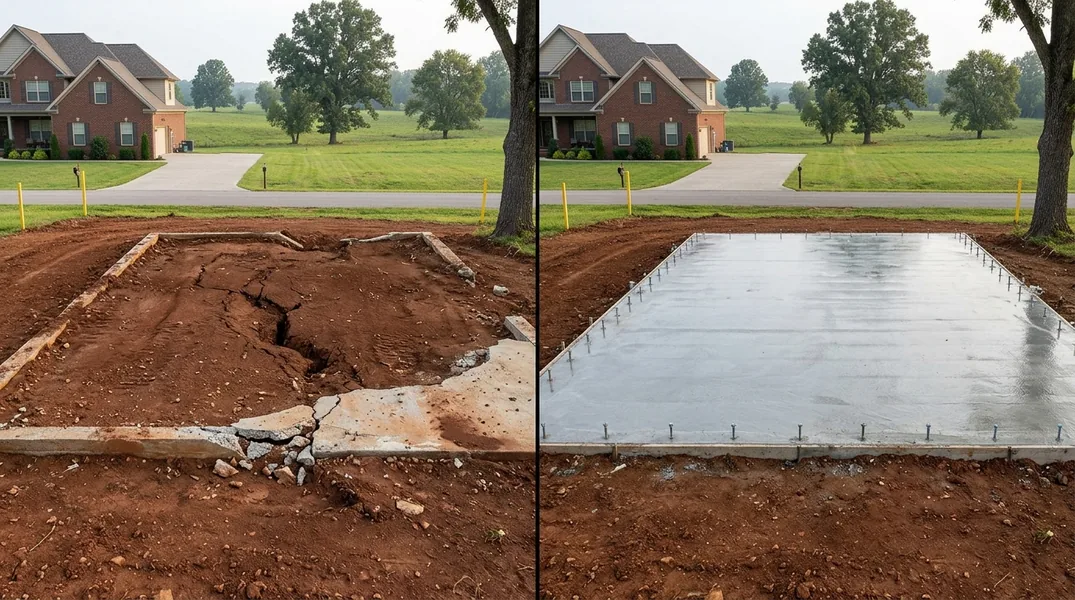
Understanding New Construction Concrete Slabs in Lexington
Buying a new home in Lexington is exciting, but many homebuyers overlook one of the most critical components of their investment: the concrete foundation slab. Whether your new build sits on a traditional poured concrete slab, a post-tension slab, or a floating slab, understanding what lies beneath your home matters far more than most people realize. A quality concrete slab can last 30 to 40 years or more, while a poorly constructed one can lead to costly repairs, foundation cracks, and structural problems within just a few years.
The concrete slab is essentially the platform on which your entire home rests. In Lexington's climate, where we experience freeze-thaw cycles and variable soil conditions, the slab's quality directly impacts how your home will perform over time. Before you close on your new construction property, you need to know exactly what type of slab your builder has installed, how it was constructed, and what guarantees or warranties come with it. Taking time to ask the right questions now can save you thousands of dollars in foundation repairs down the road.
What Type of Concrete Slab Does Your New Home Have?
Not all concrete slabs are created equal, and your builder should be able to clearly explain which type was used under your home. The most common type is the conventional poured concrete slab, which is simply concrete poured directly onto prepared soil. This is typically the most affordable option and works well in many situations. However, builders in newer developments sometimes use post-tension slabs, where steel cables are embedded in the concrete and tensioned after the concrete cures. This method can reduce cracking and provide additional strength, though it comes at a higher cost.
Another option is a floating slab, which is poured over a layer of gravel or sand without being anchored to a foundation perimeter. Each type has advantages and disadvantages depending on soil conditions, drainage, and local building codes. Before closing, ask your builder for documentation showing which method was used, the concrete strength (measured in PSI), and whether any special additives were included to protect against freeze-thaw damage. This information should be in your home's construction documents or available from your builder's superintendent.
New Home Foundation Inspection: What to Look For
A professional free estimate or inspection of your new construction slab should occur before you close on your home. While your builder may have already conducted inspections, hiring an independent inspector gives you an unbiased assessment of the slab's condition and quality. Look for visible cracks, uneven surfaces, or areas where the concrete appears to be settling unevenly. Some minor surface cracks are normal in new concrete, but larger cracks (wider than 1/8 inch) or cracks that continue to grow are red flags.
During your inspection, check for proper slope and drainage around the slab's perimeter. Water should flow away from your home's foundation, not toward it. Poor drainage is one of the leading causes of foundation problems in new construction. Also verify that the slab was properly prepared with an adequate gravel base, that control joints were installed at appropriate intervals, and that any necessary vapor barriers were placed under the concrete. If your inspector identifies issues, document them thoroughly and discuss remediation options with your builder before closing. Most builders are willing to address legitimate defects before you take ownership, but you have to catch them first.
Critical Builder Slab Questions to Ask Before Closing
You should have a detailed conversation with your builder's representative about several specific aspects of your slab. First, ask about the concrete mix design and strength rating. Standard residential slabs are typically 4 inches thick with a compressive strength of 3,000 to 4,000 PSI. In areas with poor soil conditions or heavier loads, thicker slabs or higher strength concrete may be required. Ask whether any air entrainment was added to the concrete to help it withstand freeze-thaw cycles, which is particularly important in Lexington's climate.
Second, inquire about the subgrade preparation. How was the soil prepared before pouring? Was it compacted properly? What type of base material was used, and how thick is it? Third, ask about control joints and expansion joints. These are intentional cuts or gaps in the concrete that allow for natural expansion and contraction without causing random cracking. Ask where they were placed and at what intervals. Fourth, request written documentation of the slab's warranty. What does it cover? How long does it last? Does it cover cracks, settling, or just structural failure? Finally, ask for the name and contact information of the concrete contractor who poured the slab, in case you need to reach out with questions after closing.
Common Slab Problems and How to Prevent Them
Even in new construction, concrete slabs can develop problems if they weren't installed correctly or if site conditions were unfavorable. One of the most common issues is cracking, which can result from improper curing, inadequate control joints, concrete shrinkage, or soil settlement. Another frequent problem is efflorescence, a white powdery substance that appears on the concrete surface when moisture brings salts to the top. While efflorescence is usually cosmetic, it can indicate moisture problems that may need addressing.
Scaling is another concern in our climate. This occurs when freeze-thaw cycles cause the top layer of concrete to peel or flake away. Proper air entrainment during the concrete mix design helps prevent scaling. Heaving or settling can occur if the soil beneath the slab wasn't properly compacted or if there are drainage issues. If water accumulates under the slab, it can cause the concrete to move, creating cracks or uneven surfaces. To prevent these problems, ensure that your builder followed best practices during installation, that proper gravel base and drainage were installed, and that the concrete was cured correctly. If you notice any issues after closing, document them and consider contacting a concrete specialist for an evaluation.
After Closing: Protecting Your New Concrete Slab
Once you own your home, you become responsible for maintaining the concrete slab. The good news is that with proper care, a well-constructed slab will serve you reliably for decades. Avoid placing heavy concentrated loads on the slab if possible, and be careful about using deicing salts during winter. While salt helps with traction, it can accelerate concrete deterioration. Use sand or kitty litter instead when possible, or choose pet-friendly deicers that are less harsh on concrete.
Monitor your slab for changes over time. If you notice new cracks developing, uneven settling, or other issues, address them promptly. Minor problems caught early are much less expensive to fix than major foundation repairs. For any concerns about your slab's condition or if you need Concrete Repair and Resurfacing services, the team at Lexington Concrete is here to help. We serve homeowners throughout the area and can assess your slab's condition and recommend the best course of action. Call us at (859) 710-6168 or visit our website to learn more about how we can help protect your investment.
Looking for a professional concrete contractor in Lexington? Lexington Concrete responds fast for all your concrete needs.
Get a Free QuoteOur services: Concrete Driveways · Concrete Patios · Stamped & Decorative Concrete