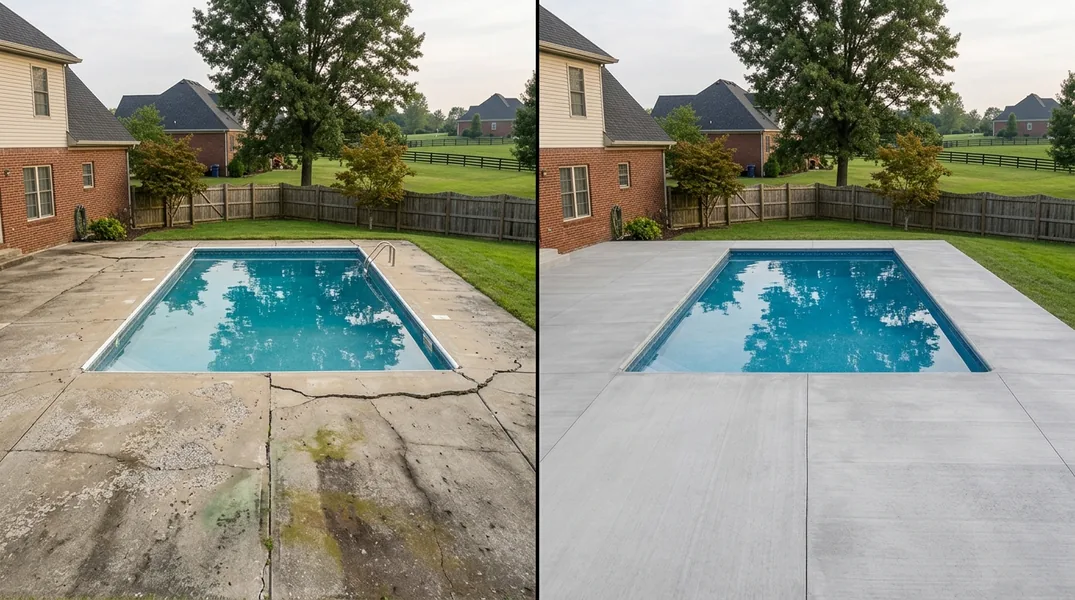
Concrete vs. Pavers: The Core Differences
When planning a new driveway or outdoor space in Lexington, homeowners often face a fundamental choice: concrete or pavers. While both materials can create attractive, functional surfaces, they differ significantly in installation, appearance, durability, and long-term maintenance. Understanding these differences is essential before making an investment that will serve your home for decades.
Concrete Driveways are poured as a single, monolithic surface, typically reinforced with steel rebar or wire mesh. Pavers, by contrast, are individual units (stone, brick, or concrete) laid in a pattern over a prepared base. Concrete offers a seamless, modern aesthetic and is generally faster to install, while pavers provide a more traditional or decorative appearance with the flexibility to replace individual units if damage occurs. Both have loyal advocates, and the right choice depends on your priorities, budget, and the specific demands of Lexington's climate.
Durability and Weather Performance in Kentucky
Kentucky's weather patterns, including freeze-thaw cycles, occasional ice storms, and significant rainfall, pose real challenges for outdoor surfaces. Concrete driveways, when properly installed and sealed, can withstand these conditions exceptionally well. A well-maintained concrete surface typically lasts 25 to 40 years or more in Lexington's climate. The key is ensuring proper drainage, using air-entrained concrete (which contains tiny air bubbles to resist freezing), and applying a quality sealant every few years.
Pavers also perform well in Kentucky weather, but they require different maintenance strategies. Individual pavers are less susceptible to cracking from freeze-thaw cycles because they have room to shift slightly, but the joints between pavers can accumulate water and debris. Over time, pavers may settle unevenly, creating drainage problems or trip hazards. While paver systems can last 25 years or longer, they demand more active maintenance than concrete to prevent weed growth, sand erosion, and settling issues. If you live in an area with heavy snow removal equipment, concrete's monolithic structure may prove more resilient to plowing damage.
Cost and Budget Considerations for Lexington Homeowners
Budget is often the deciding factor for homeowners. Concrete driveways generally cost less upfront than paver installations. In Lexington, basic concrete driveway pricing typically ranges from $3 to $8 per square foot, depending on size, site conditions, and finishing options. A 500-square-foot driveway might cost $1,500 to $4,000 for straightforward concrete work. Pavers, however, usually run $8 to $15 per square foot or higher, meaning the same 500-square-foot area could cost $4,000 to $7,500 or more.
The long-term cost picture is more nuanced. While concrete has lower installation costs, it may require Concrete Repair & Resurfacing if cracks develop or the surface deteriorates. Pavers require consistent joint maintenance, weed control, and occasional re-sanding, but individual damaged pavers can be replaced without affecting the entire surface. For budget-conscious homeowners, concrete offers better initial savings. For those willing to invest more upfront and prefer the flexibility of modular repair, pavers may justify the expense. To understand what a project would cost for your specific property, contact Lexington Concrete at (859) 710-6168 for a free estimate.
Design, Aesthetics, and Customization Options
Aesthetics matter when choosing a driveway or patio surface. Concrete offers surprising versatility beyond the plain gray slab. Stamped & Decorative Concrete can mimic the appearance of brick, stone, or wood, and can be tinted in various colors to complement your home's exterior. Concrete also accepts stains, scoring patterns, and exposed aggregate finishes that create visual interest while maintaining the durability of a monolithic surface. For homeowners seeking a modern, clean aesthetic, concrete is an excellent choice.
Pavers excel in traditional and transitional design schemes. The variety of paver materials (clay brick, natural stone, permeable concrete pavers) and the ability to create custom patterns (herringbone, basket weave, running bond) give pavers an edge in decorative flexibility. Each paver can be a different color or texture, allowing for intricate designs that would be difficult to achieve with poured concrete. However, this design flexibility comes at the cost of higher installation labor and more complex maintenance. If your home's architectural style leans traditional or you envision a distinctive pattern, pavers may better suit your vision. If you prefer a clean, modern look with subtle customization, concrete is typically the better option.
Maintenance Requirements and Long-Term Care
Concrete driveways require regular but straightforward maintenance. Sealing every two to three years protects the surface from water penetration, salt damage, and UV fading. Cleaning with a pressure washer removes dirt and algae, and prompt repair of small cracks prevents them from expanding into larger problems. In winter, avoid using rock salt on concrete; instead, use calcium chloride or sand for traction. Overall, concrete maintenance is predictable and manageable for most homeowners.
Paver maintenance is more labor-intensive. Joint sand must be replenished as it washes away, weeds need regular removal (or herbicide application), and the entire surface should be sealed periodically to prevent staining and moss growth. Power washing is recommended annually to maintain appearance and prevent algae. If a paver settles or cracks, it must be removed and replaced, which requires careful work to avoid disturbing adjacent units. For homeowners who enjoy hands-on yard work or are willing to hire maintenance services, pavers can be rewarding. For those seeking a low-maintenance option, concrete is the clearer choice.
Making Your Decision: Which Material Is Right for You?
Choosing between concrete and pavers ultimately depends on your priorities. If your primary concerns are cost-effectiveness, durability, minimal maintenance, and a clean modern appearance, Concrete Driveways are the ideal solution. Concrete performs exceptionally well in Lexington's climate and offers excellent value over the lifetime of the installation. If you prioritize design flexibility, traditional aesthetics, the ability to replace individual units, and don't mind more active maintenance, pavers may be worth the additional investment.
Consider your home's architectural style, your budget both for installation and future maintenance, your climate concerns, and your personal commitment to upkeep. Many homeowners also use a hybrid approach, choosing concrete for driveways (where durability and cost matter most) and pavers for Concrete Patios or decorative areas (where aesthetics and flexibility are priorities). Whatever you decide, working with an experienced local contractor ensures proper installation and long-term performance. Lexington Concrete specializes in both concrete and paver solutions and can help you weigh your options based on your specific needs. Call us at (859) 710-6168 or request a free estimate today to get started on your project.
Looking for a professional concrete contractor in Lexington? Lexington Concrete responds fast for all your concrete needs.
Get a Free QuoteOur services: Concrete Driveways · Concrete Patios · Stamped & Decorative Concrete